
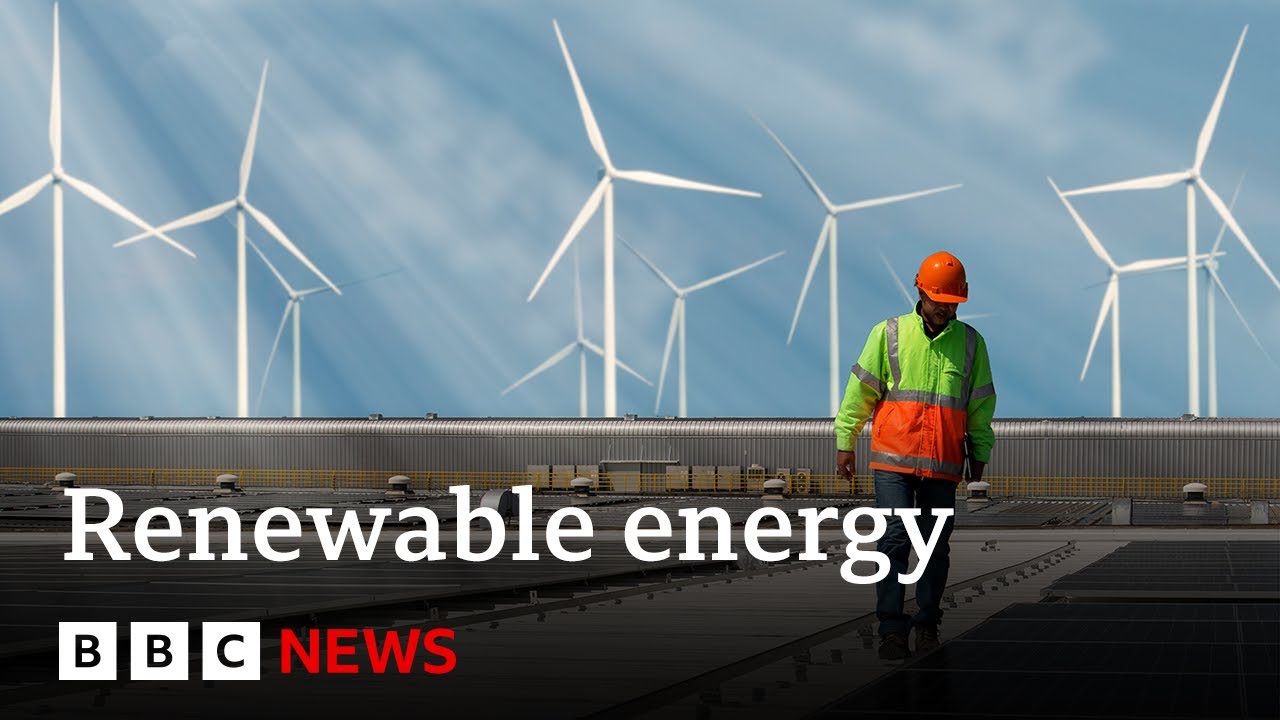
Summary
For the first time since **1919**, **renewable energy sources** generated more of the world's electricity than **coal** in **2025**. This historic crossover, detailed in **Ember's Global Electricity Review 2026**, signifies a monumental shift away from the fossil fuel that has dominated global power for over a century. **Solar power**, in particular, has seen explosive growth, meeting **75 percent** of the increase in global electricity demand last year, while wind and solar combined accounted for **99 percent**. This transition, driven by falling solar prices and rapid supply chain expansion, suggests a potential acceleration of the clean energy future, even amidst geopolitical uncertainties.
Key Takeaways
- Renewable energy surpassed coal in global electricity generation for the first time since 1919.
- Solar power was the primary driver of this shift, meeting 75% of new electricity demand in 2025.
- The cost of solar power has fallen dramatically over the past four decades, making it increasingly competitive.
- Fossil fuel generation saw a marginal decline, indicating the transition is underway but still faces significant scale.
- This milestone represents a major turning point in the global effort to combat climate change.
Balanced Perspective
The data from Ember's Global Electricity Review indicates a significant shift in the global energy mix. While renewables surpassed coal in **2025**, coal still represents a substantial portion of electricity generation. The decline in fossil fuel power generation was marginal in 2025, suggesting that while the trend is clear, the complete phase-out of coal and other fossil fuels will be a protracted process requiring sustained policy support and technological advancement.
Optimistic View
This milestone is a powerful testament to the accelerating viability and economic competitiveness of [[solar-power|solar energy]] and [[wind-power|wind power]]. The fact that renewables are now growing fast enough to meet nearly all new global electricity demand, coupled with the dramatic price declines predicted by [[swansons-law|Swanson's Law]], paints a bullish picture for a rapid decarbonization of the global energy sector. Expect continued innovation and investment, pushing us closer to ambitious [[climate-goals|climate goals]] and energy independence.
Critical View
While a symbolic victory, the continued reliance on **8.8 billion tonnes of coal** in **2024** highlights the immense challenge ahead. The article notes that fossil fuel generation *fell* by only **0.2 percent** in 2025, indicating that coal's absolute output remains massive. Furthermore, the dependence on supply chains and potential geopolitical disruptions in regions like the Middle East could easily stall or even reverse this progress, especially if investment in new renewable capacity falters.
Source
Originally reported by Vox