
Summary
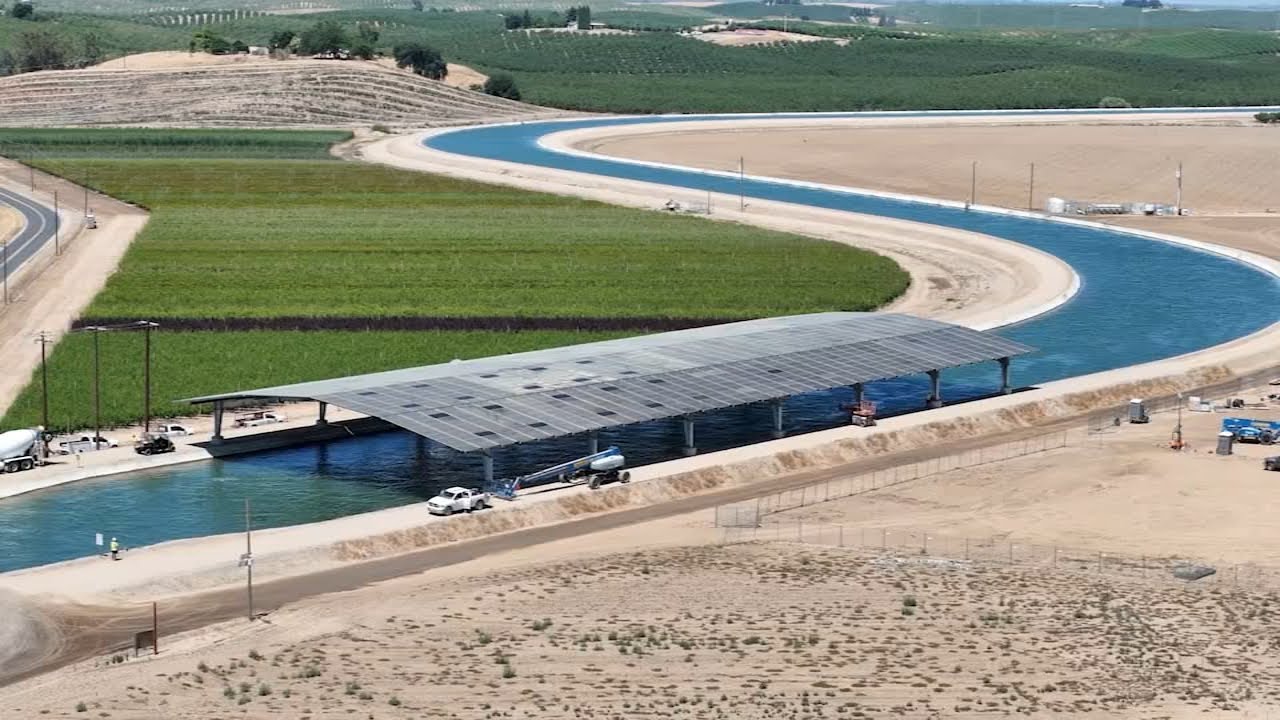
**Governor Gavin Newsom** has announced the completion of **Project Nexus**, a pioneering **$20 million pilot project** in California's **Central Valley** that installs **solar panels over irrigation canals**. This initiative, a collaboration between the **California Department of Water Resources**, **Turlock Irrigation District (TID)**, **SolarAquaGrid LLC**, and **UC Merced**, seeks to address critical water and energy challenges. By covering canals, the project aims to significantly reduce water loss from evaporation, generate renewable electricity, and potentially lower maintenance costs. The findings from this **first-of-its-kind project** will be crucial in determining the feasibility of scaling this innovative approach to bolster the state's resilience against a hotter, drier future.
Key Takeaways
- California has launched a pilot project installing solar panels over irrigation canals to save water and generate electricity.
- Project Nexus is a $20 million initiative involving state agencies, a utility district, a private firm, and a university.
- The project aims to reduce water evaporation, produce clean energy, and potentially lower canal maintenance costs.
- This 'first-of-its-kind' approach seeks to build resilience against drought and a hotter climate.
- The findings will determine the feasibility of scaling this innovative water-energy solution.
Balanced Perspective
Project Nexus is a pilot program designed to gather empirical data on the efficacy of solar-over-canal technology. Key metrics will include the amount of clean energy generated, the reduction in water evaporation, potential improvements in water quality, and the impact on canal maintenance costs, such as vegetation control. The project's success hinges on the accurate measurement and analysis of these factors by UC Merced, which will inform future policy and investment decisions regarding similar infrastructure projects across the state.
Optimistic View
This project represents a visionary leap in climate adaptation, demonstrating California's commitment to innovative, dual-purpose infrastructure. By transforming passive water channels into active energy generators, Project Nexus offers a tangible path to simultaneously combatting drought and advancing clean energy goals. If successful, this model could unlock vast, underutilized spaces for solar development, significantly contributing to the state's renewable energy targets while preserving vital water resources for agriculture and communities.
Critical View
While innovative, the true impact of Project Nexus hinges on its scalability and cost-effectiveness beyond this $20 million pilot. The Central Valley's extensive canal network is vast, and retrofitting it with solar infrastructure presents significant logistical and financial hurdles. Furthermore, potential impacts on water flow dynamics, aquatic ecosystems, and the long-term durability of the panels in an agricultural setting remain areas requiring thorough investigation before widespread adoption can be considered.
Source
Originally reported by California State Portal | CA.gov